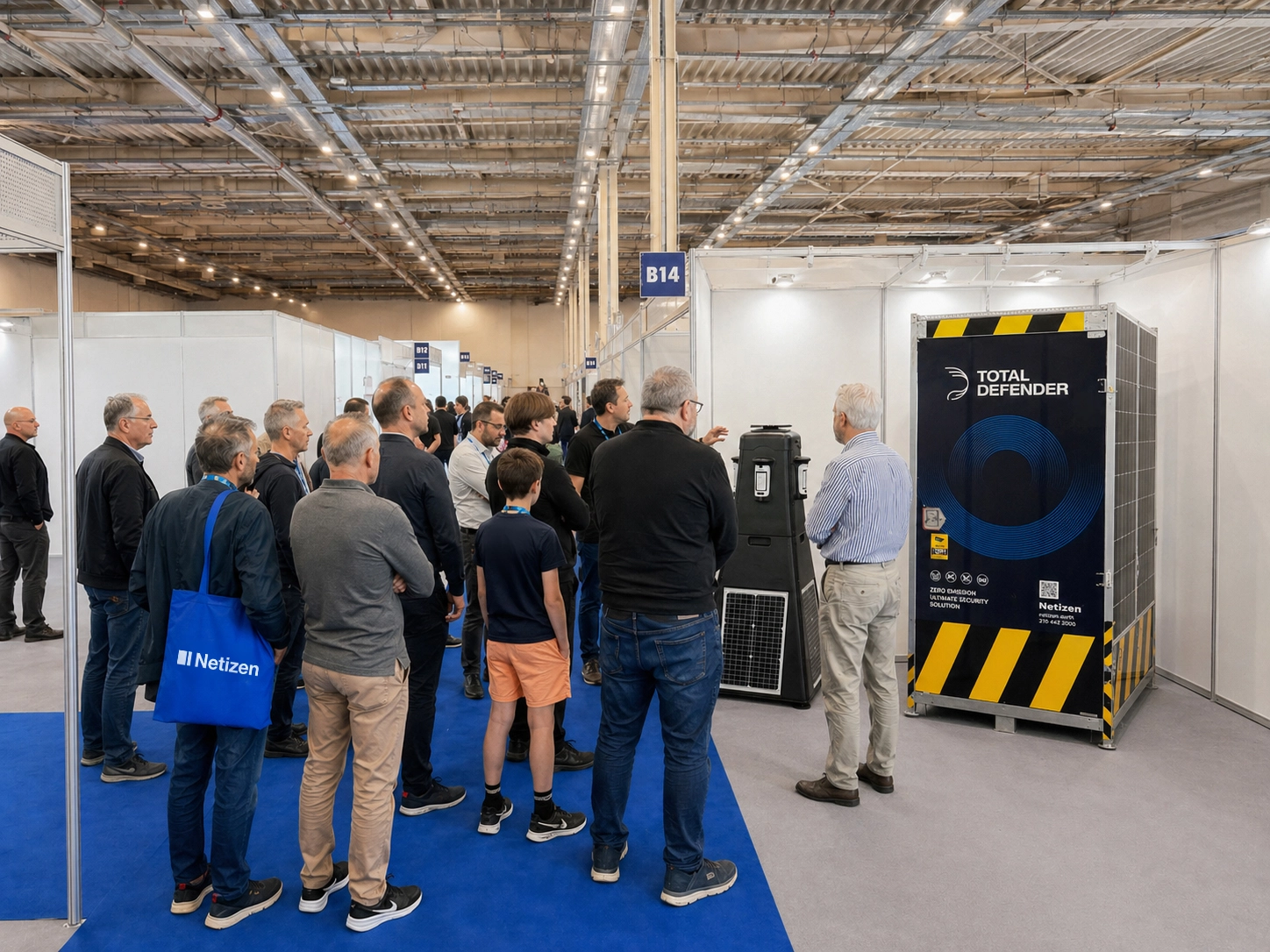
For decades, security was static. A guard stationed at one location, patrolling along a predetermined path, relying on human reaction and instinct. But this model is now obsolete. At the A&R Expo 2026, Netizen presented the future of security: systems that don't wait, don't tire, and don't have human limitations. This isn't merely a technological upgrade, it's a radical transformation in how we think about security.
This article explores the evolution from static security toward autonomous systems, the trends driving this change, and what it means for businesses today.
The problem with static security
Traditional security has a fundamental weakness: it's static in a dynamic world. While the world changes rapidly, security methods remain essentially unchanged since the 1980s.
Limited coverage, high costs
A single guard can observe only one area at a time. To cover a large construction site or industrial facility, you need multiple guards. This means:
- 2-5 people per shift for 24/7 coverage
- Salaries, benefits, insurance
- Costs that often represent 60-80% of total security spending
For small and medium-sized enterprises, this is frequently prohibitive. The result? Unprotected areas and increased risk.
Human errors that cannot be avoided
Guards are human. They get tired. They lose focus. They may miss critical events or respond slowly due to fatigue or inattention. False alarms are common, reducing system effectiveness.
Difficulty in remote locations
In remote agricultural areas, warehouses without nearby services, or construction sites in desert regions, security is even more challenging and expensive. Many such locations remain completely unprotected.
Lack of data
In static security, there's no systematic recording. If something happens, you have only guard reports, which may be incomplete or inaccurate. For legal proceedings, investigations, and improvements, this creates critical gaps.
The emerging alternative: Autonomous security
While static security remains trapped in its limitations, autonomous security offers a radically different approach.
Continuous monitoring without fatigue
High-resolution cameras combined with artificial intelligence can monitor 24/7 without tiring. Algorithms can detect movement, faces, objects, and threatening behaviors with virtually 100% consistency.
Multiple coverage with centralized control
A single Command Center can monitor 20, 50, or even 100 locations simultaneously. This creates scalable solutions for businesses and sites of any size.
Data that can be analyzed
Every incident is recorded digitally. This creates a complete history that can be:
- used in legal proceedings
- analyzed for risk trends
- improve systems through machine learning
- provide security evidence
Flexibility that static security cannot inherently have
Autonomous security towers can be deployed in less than 24 hours and moved easily. For construction sites, temporary needs, or layout changes, this is a tremendous advantage.
The transition: From traditional to autonomous
It's not simply that autonomous security is better, it fundamentally addresses the core problems of static security.
Competitive or lower costs
Within 1-2 years, autonomous security costs typically pay for themselves through personnel savings. After that, operating costs are only a fraction of traditional security.
Coverage that scales
While static security scales linearly (more guards = more cost), autonomous security scales logarithmically. A single Command Center can monitor 20 or 200 locations without proportional cost increases.
Consistent performance
There's no "bad day" for an autonomous system. It doesn't tire, get distracted, or have any relationship-based problems. Performance is steady and predictable.
The A&R Expo example: Netizen demonstrates the transition
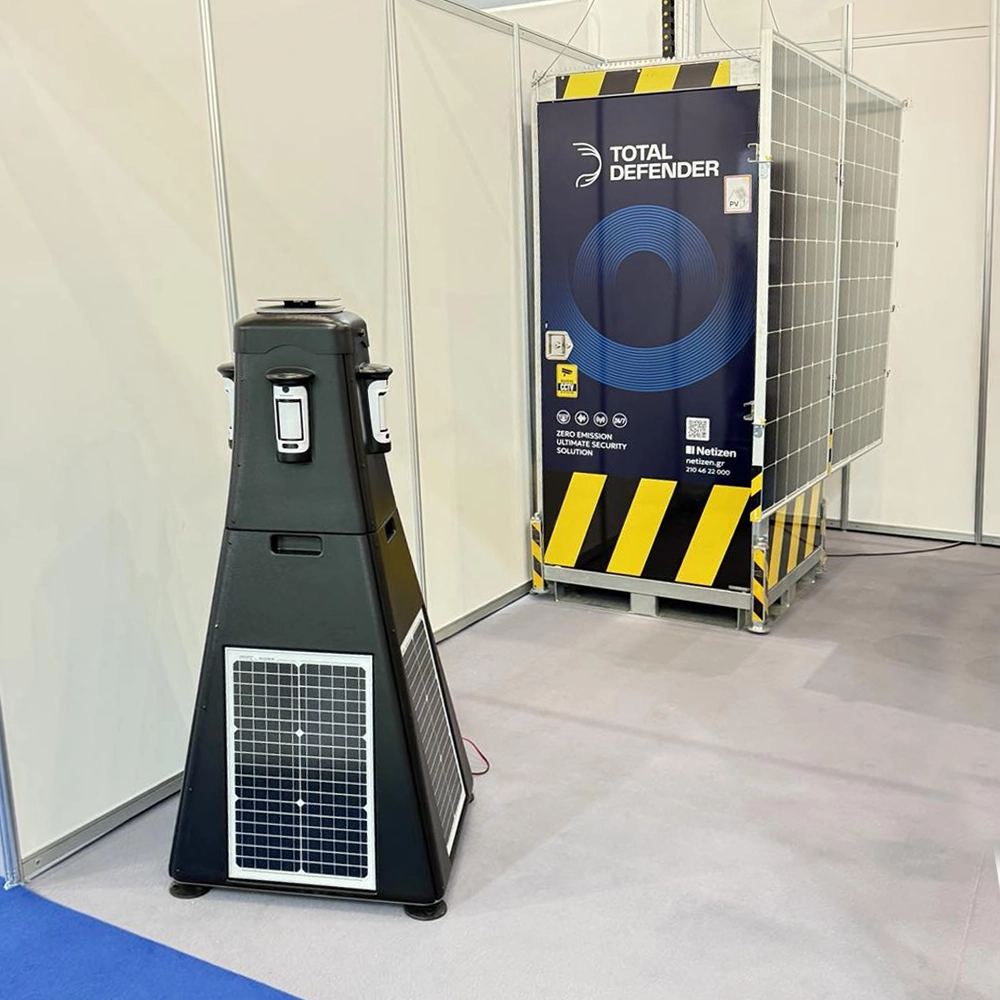
At A&R Expo 2026, NETIZEN presented two autonomous security towers that embody these principles. This wasn't simply a product exhibition, it was a demonstration of the transition from static security toward the future.
The main tower: For large areas
Capable of covering 8+ acres with full autonomy:
Before (Static Security):
- Requires 4-5 guards per shift
- 24-hour coverage = 12-15 people per week
After (Autonomous Security):
- 1 tower + 1 operator in a shared command center
- Same coverage with 90% cost reduction
The "Total Defender" philosophy: Five stages that surpass static security
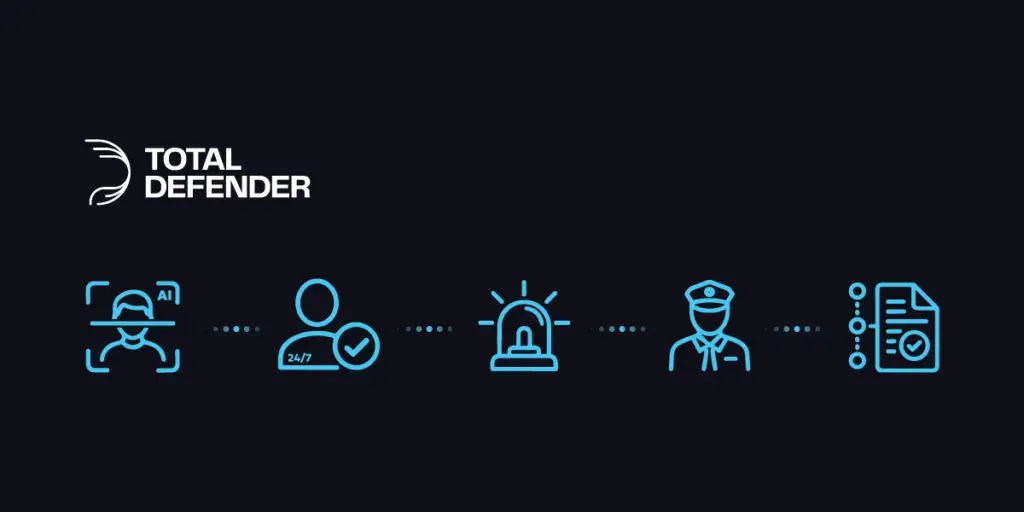
- Detection: AI detects immediately without human response delays
- Verification: An operator confirms the event (prevents false alarms)
- Deterrence: Lights and sounds activate immediately (prevents before problem escalates)
- Response: Security forces or authorities are notified (threat interception)
- Documentation: Complete recording for investigation and legal proceedings
Unlike static security where a single guard can fail at any stage, this system ensures each stage executes flawlessly.
Why now? The trends driving the transition
Autonomous security isn't accidental, it's the result of converging technological trends.
Maturity of Artificial Intelligence
AI is now accurate enough for practical applications. It can distinguish real threats from false positives with high precision.
Next-Generation cameras
4K, 8K, and thermal cameras can see details humans cannot, even in challenging lighting conditions.
Robotics now affordable
While robotics was prohibitively expensive a decade ago, costs have dropped dramatically. Systems that cost hundreds of thousands are now accessible.
Connectivity reaching everywhere
5G and satellite broadband mean even remote areas can now connect reliably.
Rising labor costs
Higher wages and worker shortages make static security increasingly expensive and difficult.
Applications: Where the transition is already happening
Construction Sites: The front line of change
Τα Construction sites are ideal for autonomous security. They're temporary, have high equipment theft costs, and require flexibility. Autonomous security delivers all this without traditional security costs.
Factories and warehouses: The new standard
Large warehouses are already transitioning to autonomous systems. 24/7 monitoring without personnel costs is becoming the standard.
Agricultural lands: An overlooked market
Remote areas were historically underprotected due to costs. Autonomous security changes this, making security affordable even in rural regions.
Critical infrastructure: A new era of security
Power plants and other critical infrastructure are already adopting autonomous systems for higher security standards.
Security is no longer static
The transition from static security to autonomous isn't a technological upgrade – it's a fundamental redesign of how we protect what matters.
At the A&R Expo, Netizen presented two towers representing this transition. This wasn't merely a product demonstration – it was an invitation to see the future and ask: "Why am I not making the transition now?"
The question is no longer "Can we use autonomous security?" The question is: "How quickly can we leave traditional security behind?"
Security is no longer static. It moves, adapts, and learns. And with systems like those showcased at the A&R Expo, this future isn't coming, it's here now.
Are you ready for the transition?